Legal Structure
The legal structure of a business should be selected based on three key factors:
- Your objectives
- The number of people involved in managing the business
- The level of financial risk you are prepared to assume
In Québec, there are four main legal structures:
- Sole proprietorship
- Partnership
- Corporation
- Cooperative
Each structure comes with its own legal obligations, tax implications, and level of protection. There is no single best option, only the one that best matches your situation.

What Are the Main Legal Structures in Québec?
- A sole proprietorship is the simplest way to start a business. It involves minimal costs and administrative requirements. Legally, the owner and the business are one and the same, meaning personal assets are not protected from business debts.
- A partnership operates similarly but involves two or more partners who share responsibilities, profits, and liabilities.
- A corporation creates a separate legal entity. The corporation owns its assets, signs contracts, and assumes its liabilities. It also offers liability protection and can provide tax advantages as the business grows.
- A cooperative follows a collective governance model where each member has one vote, regardless of the amount invested. This structure is often used by organizations operating in the social economy sector.
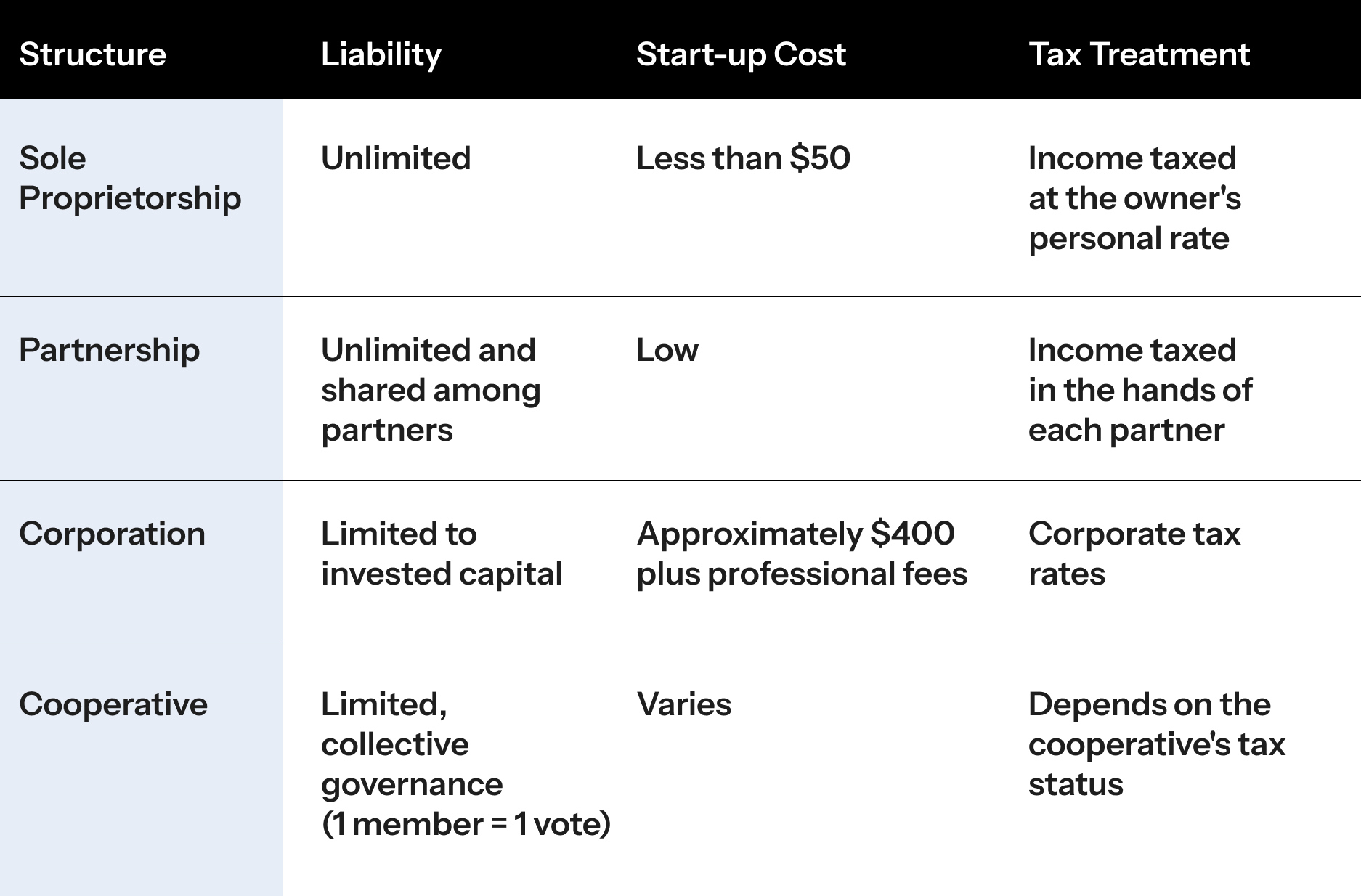
To learn more, consult our guide to the four legal structures available when starting a business.
Choosing a Legal Structure in Two Steps
1. Consider Who Is Involved
The number of people involved in the business will help determine whether a collective structure is appropriate and whether an agreement between partners or shareholders will be required.
2. Clarify Your Objectives
Your goals should guide your choice.
If credibility with lenders, investors, or business clients is a priority, incorporation may be the better option. If simplicity and low administrative costs are more important at launch, a sole proprietorship may be sufficient.
Your tolerance for personal financial risk is also a key factor, as a corporation helps separate business liabilities from personal assets.
Making the right choice from the beginning can help avoid a costly and complex restructuring later.
Common Mistakes to Avoid
If you are incorporating with one or more partners, one of the most important documents is the shareholders' agreement.
This agreement defines:
- How disputes will be resolved
- What happens if a shareholder leaves the business
- How shares can be sold or transferred
- Under what conditions the business may be sold
Without clear rules, disagreements can slow decision-making and create legal or financial challenges.
The best time to establish these mechanisms is at the beginning, while relationships are strong and expectations are aligned.
Can You Change Your Legal Structure Later?
Yes. Many entrepreneurs begin as sole proprietors and incorporate as their revenues and profits increase. This transition is often completed through a tax mechanism known as a rollover, which allows business assets to be transferred to the new corporation without triggering immediate tax consequences, provided the transaction is structured properly with professional advice.
FAQ
Why Is the $30,000 Threshold Important for a Sole Proprietorship in Québec?
Once annual taxable revenues exceed $30,000, a business generally must register for GST and QST, collect taxes from customers, and remit them to the government.
Preparing for this milestone helps avoid administrative surprises.
How Much Does Registration or Incorporation Cost in Québec?
Registering a sole proprietorship generally costs less than $50.
Incorporating a business typically involves approximately $400 in government fees, in addition to professional fees for preparing incorporation documents and a shareholders' agreement, which often range between $1,500 and $2,000.
Where Should You Start?
Begin by clarifying the type of business you want to build:
- A solo business?
- A business with partners?
- A venture that may seek investment?
A business plan can help structure this reflection before registration.
For more complex situations, consulting an accountant or business lawyer can help translate the available options into a practical recommendation.
Does Location Affect the Choice of Legal Structure?
No. The same business laws apply throughout Québec. The appropriate legal structure depends on factors such as ownership, liability, governance, and profit distribution, not on the municipality where the business operates.
Each legal structure comes with its own tax, legal, and governance implications. Before making a decision, consider consulting a lawyer or accountant and compare your options based on your actual objectives rather than common industry practices.
Did you enjoy this content?
Explore our related articles.

Article
Quelle forme juridique choisir au démarrage d'une entreprise?
17 Jul