To get started, focus on four priorities:
(This foundation can then evolve as both the business and the team grow.)
- 1. Clarify roles
- 2. Define responsibilities
- 3. Establish priorities
- 4. Set a few basic operating guidelines
The Charter of the French language and its regulations govern the consultation of English-language content.
Once a business is up and running, the next step is making sure day-to-day operations run smoothly.
This typically relies on three essentials: suppliers, human resources, and the tools needed to support operations.
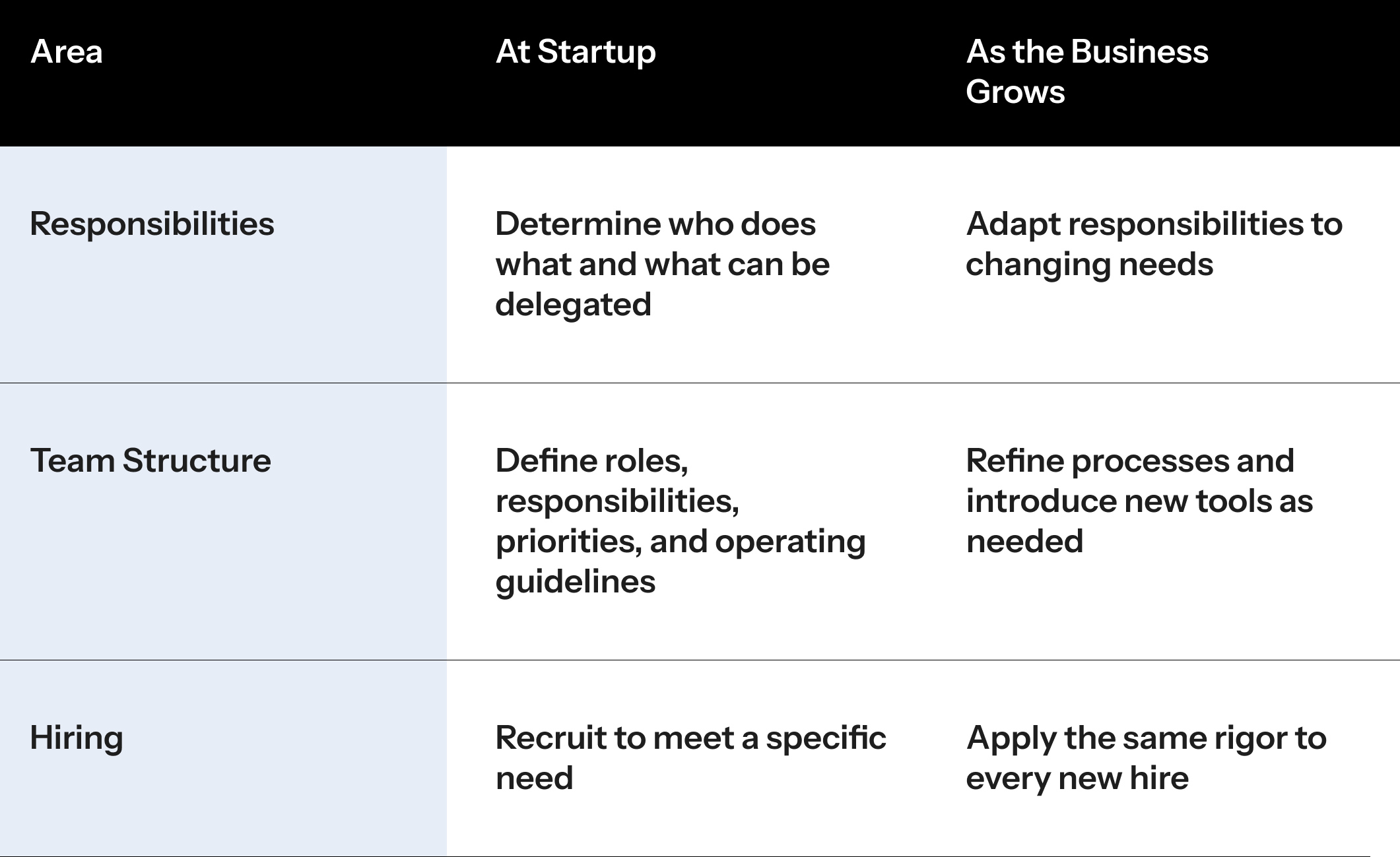
In the early stages, entrepreneurs often wear many hats. Clearly defining responsibilities, hiring based on actual needs, and adapting the organization as the business grows can help prevent workload overload and confusion.
The first few weeks, and often the first few months, are typically a period of adjustment and refinement.

When responsibilities are not clearly defined, tasks often end up being completed by whoever is available rather than by the person who should be accountable for them. As the business grows, this can create inefficiencies and slow down decision-making.
Taking the time to establish clear responsibilities from the start helps distribute the workload effectively and supports smoother operations.
Selecting a business partner can significantly influence the future of your company. Beyond personal compatibility, it is generally best to focus on complementary skills, experience, and goals. Strong complementarity often leads to better decision-making, a more balanced distribution of responsibilities, and broader expertise within the business.
Many entrepreneurs hesitate to hire because they worry it will make managing the business more complicated. In reality, building a team does not necessarily mean adding administrative burden.
The key is to organize work according to the company's actual needs and make adjustments before challenges begin to pile up.

(This foundation can then evolve as both the business and the team grow.)
One of the most common mistakes is hiring under pressure, without clearly identifying the role, responsibilities, and skills required.
Another is choosing someone primarily because they are available or seem trustworthy, without confirming that their profile aligns with the company's needs.
Before recruiting, start with a simple question: What specific tasks will this person be responsible for?
Clear expectations, well-defined responsibilities, and realistic objectives make onboarding easier and contribute to a stronger, longer-lasting working relationship.
There is no universal sequence. Every business must set its priorities according to its own reality.
The important thing is to have the essentials in place to begin operations: suppliers, the necessary human resources, and the tools required to do the work, whether equipment, software, or management solutions.
At the outset, the main goal is to serve your first customers, track revenue and expenses, and keep operations running smoothly.
To stay organized, it can be helpful to implement a simple tracking system that centralizes key information such as sales, expenses, tasks, customers, and important deadlines.
It is also normal for everything not to be fully in place on day one. The goal is not to build a perfect organization immediately, but to create a solid foundation that can improve and evolve through experience and growth.
The best partnerships are usually built on complementary skills, experience, and objectives rather than personal relationships alone. The choice of partner can have a significant impact on the company's long-term success and growth.
Your organization should evolve as your business evolves. Making adjustments gradually is generally more effective than waiting until problems start affecting operations.
Successful onboarding starts with clear expectations. A well-defined role, precise responsibilities, and realistic objectives help new employees integrate more quickly and contribute effectively from the start.

Contact us now.
Explore our related articles.
4 May

23 Jun
Network